








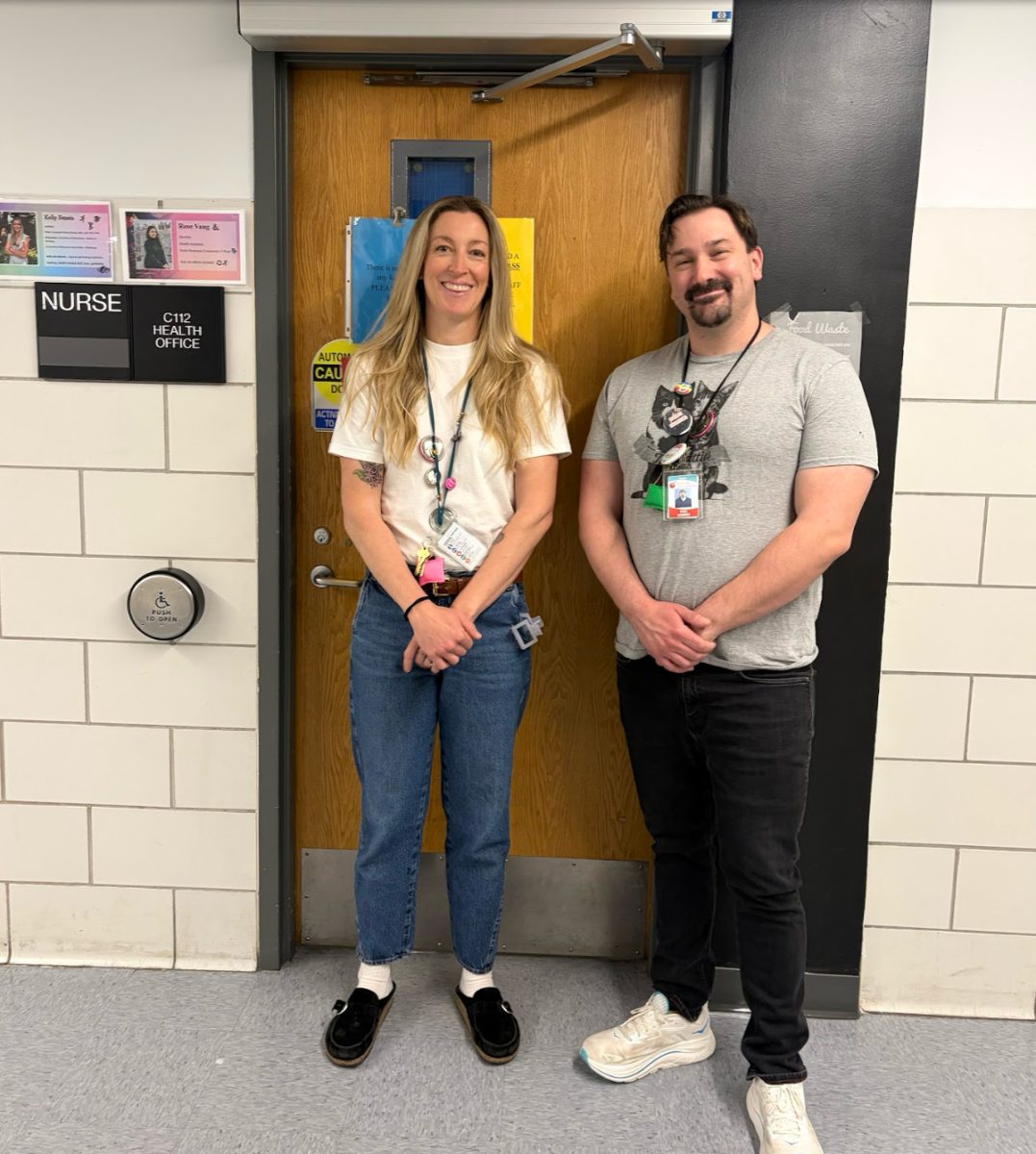
Registered nurses (RNSs), Tres Commer and Kelly Feneis sat down with The Ville to share the more obvious and hidden parts of a day in the life of a school nurse. On April 2nd, in an interview, the two relatively new RAHS staff shared how they feel about their job and RAHS by giving insight on the role of a school nurse role and what it really means to take care of students.
The nurses’ day starts early with students streaming in before classes even start. Before the rush, Commer, Feneis, and Rose Vang (the health office clerical staff) debrief on the previous day. They arrive at school at 7:30 and almost right away students begin coming with requests. Feneis noted, “Students start to come in and some are bringing in signed forms…Students come in requesting elevator passes, medications, and more, all before the day even begins.”
Feneis lists more of the many tasks the nurse team does day to day. “Students regularly come in for an injury or, a sore throat, or they twisted their ankle, determining if they’re okay to go back to class… if they need to go see a doctor…collaborating with the parents to make those decisions…also responding to medical emergencies,”
On top of physical ailments the school nurses also tend to the invisible ones. Feneis added, “I feel like mental health is big too. So sometimes people just need a break or need to talk to someone.”
Feneis also talked about the behind the scenes work of being a school nurse; part of their job is planned and part is responding to whatever situations arise. She said, “We’re sitting in our office trying to do some of the background work of figuring out maybe who’s due for an immunization, calling families and other things like figuring out medication refills.”
As the nurses do this administrative work, they treat kids as they come in. “We get interrupted probably a thousand times throughout the day, as we’re trying to do those things,” said Feneis.
The public often underestimates the complexity of the job a school nurse does. But Commer and Feneis reveal their job is hard work and they need to remind each other to step away from their busy schedule. Feneis explained, ”We kind of try to hold each other accountable or ask each other if we’ve been able to take our break and eat. And sometimes we end up hovering over our desk like a farm animal eating our lunch,” Feneis shared, “…we can’t care for other people if we don’t care for ourselves.”
Before coming to RAHS, both Feneis and Commer worked in hospital settings with Feneis working mostly in a clinic and Commer in the emergency room. They reflected on the differences from working in a hospital to being a school nurse. Feneis shared, “In the clinic I would do blood draws or place IVs or give medications. And it just was a lot more of the hands on kind of nitty gritty nursing skills. And here I use more of my kind of broad nursing assessment skills.”
Commer named a few reasons why healthcare outside of school differs from working in the ER. One reason he shared is because, “your care [at a school] isn’t kind of determined by some outside pressure or metric. You can provide ethical, and safe care, and you can meet the student where they’re at… For example, giving …[patients] the time they need versus having someone else predetermine how long it should take.”
Commer said, “what I like about the school is we feel a little bit insulated from that pressure.” He then expressed his favor for more case management and collaborating with doctors instead of working beside them as well.
The nurses came from a variety of backgrounds before coming to RAHS. Feneis started her journey to becoming a school nurse when she was recommended by a friend. She explained, “I worked with someone who had worked in the schools and had said she really loved it.”
Feneis then described how she got to know Roseville through her kids and how her previous work led her to school nurse. She said, “I was working in another job for a long time. I worked in a clinic in sexual reproductive health and I worked with some adolescents through people in their 50s. I just sort of wanted a change from that work and my kids are in the Roseville district. So I kinda just gave it a shot.”
Feneis then explained how she has loved being a school nurse and getting to help kids through their high school years ever since, “Every day is really fun and interesting and all of the students are fun and interesting and it’s been cool getting to know people. I know [high school] can be a hard time in people’s life. It can just feel like a long four years for some people and for some people they love high school so it’s just fun to be a part of that experience for all the students that I get to meet.”
Commer explained how Roseville’s equity values led him to working here at Roseville. He said, “Roseville has equity in their mission statement and I think that’s really important because I think that’s needed in healthcare so that was one thing that drew me here for sure. Then when I did my interview I met Kelly and she’s been a great partner and the other staff so really vibing with everybody.”
Once they chose Roseville, they completed a series of tasks to become a school nurse. Feneis explained that, “There’s a pretty lengthy application. You have to be a registered nurse for this district.”
In addition to being an RN they shared that you also need to have a public health nurse certificate to be a school nurse.
For their interview Feneis explained how the panel style interview worked, “we got interviewed by our boss or who would be our boss…it’s kinda like a panel interview, and then for (Commer) I was on the interview panel, so it’s just like a combination of people in the district. They had an associate principal from rahs interviewing me too…it was pretty standard interview questions for a nurse I would say, each question was getting at a different value of the school district or a bigger component of what your job would be.
Commer added about how having people that understand the nurse role in the panel was very beneficial to him, “having peers on the panel or people that you work with is honestly pretty helpful versus just administration interviewing. Because the administration doesn’t do ‘on the ground work’, with having people interview you and know that this person would fit here and will I work well with them and that’s important too.”
Commer then expressed how he wants kids to feel welcome coming into the health office. He explained, “one of our main goals here is to create a welcoming space for students to come and, you know, feel comfortable here and be able to experience what they’re experiencing and we can support them however best we can support them.”
The RAHS nurses work hard at their jobs but have made it clear they are always available to tend to students’ needs with tasks big or small.