










The Boundary Waters are a protected wilderness along the U.S. Canada border. They are over 1 million acres in size prioritizing its vital watershed.
On April 16, 2026 the U.S. Senate overturned a 20-year mining ban on the Boundary Waters with a vote of 50-49.
Ms. Laura Jansen, who teaches AP Environmental Science, Forensics and Biology commented on the beauty of the Boundary Waters. She said, “People go there for recreation, tons of plant and animal life. It’s a beautiful place, very natural, one of the only places left that is pristine and protected in this area.”
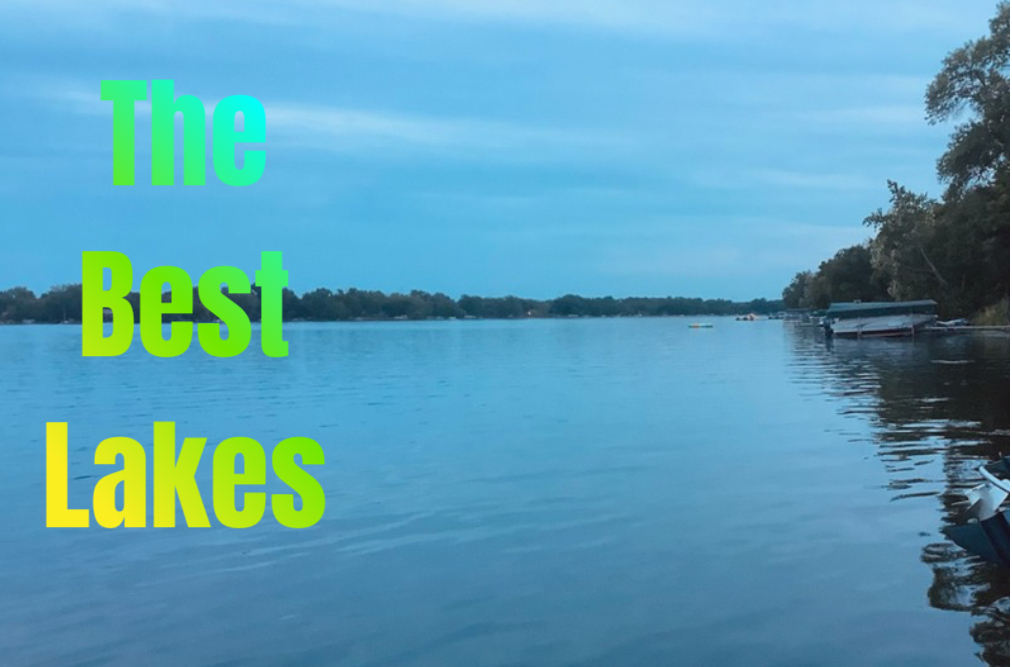
Franklin Strupeck (9) wrote his persuasive essay for Accelerated English 9 on the Boundary Waters and noted what makes the place special. He said, “it is a perfect place to escape city life and enjoy the outdoors. It doesn’t allow motor boats and is essentially pure wilderness. There are tons of beautiful lakes with a variety of characteristics (Clear, marshy, large, small), and they all offer something different.”
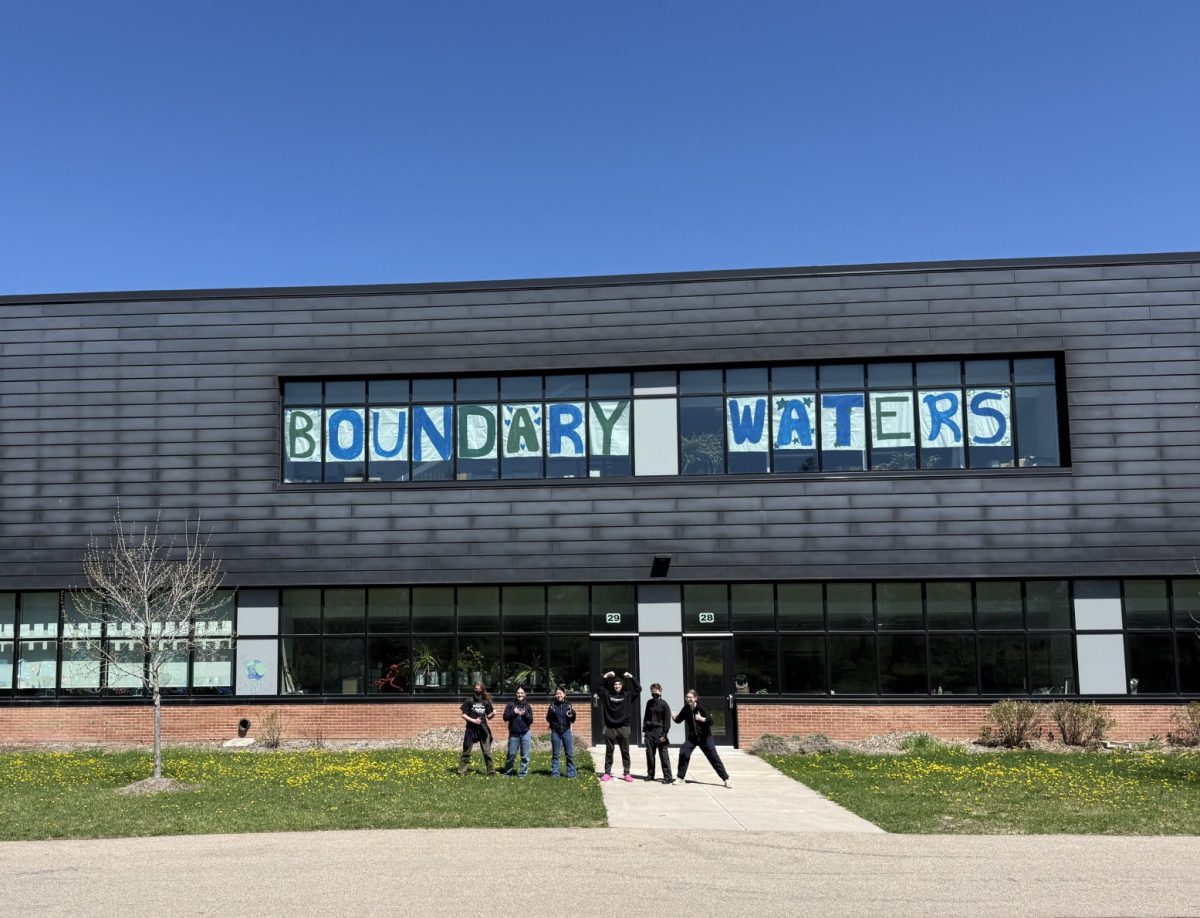
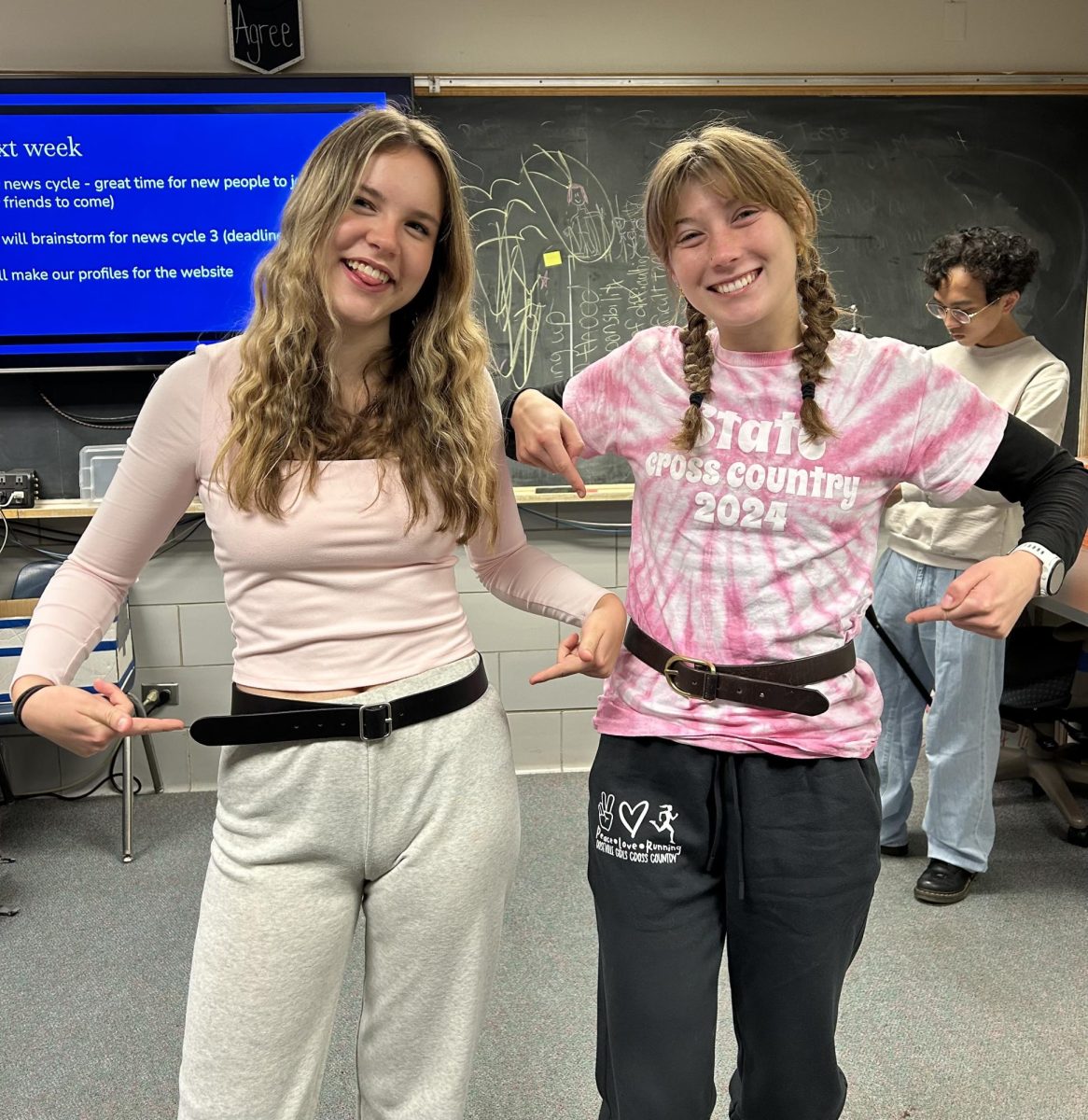
The week following the Senate’s overturning of the mining ban, a group of Ms. Jansen’s AP Environmental Science students collaborated on a project during their lunch period advocating for the Boundary Waters. They created giant posters with letters spelling out SAVE THE BOUNDARY WATERS and sticking them on the school windows that face Highway 36.
Jansen explained what the vote means for the Boundary Waters. She said, “This [legislation] would enable mining companies to potentially be able to mine in the vicinity close by to the boundary waters, which would have huge impacts on water quality, plants and animal life.”
She also dived in deeper in the contamination of mining and said, “Once we have pollution that happens in this watershed, It would be nearly impossible to put it back to the way it was, the copper mining they are going to do, which could contribute to acid rain in northern Minnesota, and also the heavy metals that will definitely leach into the bodies of water.”
Hundreds of thousands people visit the Boundary Waters every year for the beautiful scenery it provides. Strupeck shared his personal connection to the Boundary Waters, “I have been going there since I was very young. My mom used to work at a canoe outfitter on Sawbill Lake which is part of the boundary waters. My family goes every summer and it is a very special place to me.”
Strupeck’s family is not the only one with this tradition. It has been a place to visit if you live in Minnesota and love the outdoors. If mining were to happen, the beautiful Boundary Waters would no longer be the place to visit as the pollution from mining has the potential to harm all the species in and around the Boundary Waters.
If you want to advocate for the Boundary Waters you can join groups like Friends of the Boundary Waters as well as donating your money and time to such groups. Mining is not for sure yet it still has to get passed so you can write your representatives to stop that from happening. All in all as Ms. Jansen said, “just talking about it and letting people know, especially people that are younger, because hopefully you guys will want to visit and take your families and future generations up there.”