



















Struggling on what career path to go into? Wanting to learn more about a job or hear about first hand experiences? Professionals can give a first hand take on the job and give an accurate description of their responsibilities and schooling.
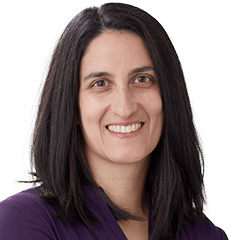
Dr. Lazaro is the head of an Obstetrics-Gynecology (OBGYN) clinic here in Minnesota. These clinics provide medical advice, treatments, and check-ups, but deal with non-emergency care unlike hospitals. OBGYN health professionals focus on women’s reproductive health which can include pregnancy, childbirth, and more general women’s care like cancer screenings and contraception.
Did you (Dr. Lazaro) always see yourself going into Obstetrics-Gynecology and what inspired you to go into healthcare or women’s care?
“My grandmother was an OBGYN in India, and so it was something that I did consider, though when I first entered medical school, I thought I was going to pursue infection disease because of other people within medicine that I admired. As I went through medical school, I became more familiar with the different specialties, and found I enjoyed both surgery as well as longer term relationships with patients and clinical practice, so OBGYN was a good fit for me”.

Dr. Richardson is the medical director of the Healthy Beginnings program. This program focuses on substance use, environments that can change a person’s health outcomes (social determinants of health), and the issue of racism in healthcare.
Did you (Dr. Richardson) always see yourself going into women’s healthcare and what inspired you to focus on substance use issues?
“No – I considered doing internal medicine when I was in medical school. But I thought birth and obstetrics were so exciting – that really drew me in to ob/gyn. I have had family members affected by substance use and for many patients, pregnancy can inspire them to make positive changes for their health. I love helping to support patients who have these issues and celebrate their successes. Our Healthy Beginnings program also works towards addressing other barriers to health including mental health, poverty, housing, etc. Recently, we have been able to hire community health workers that will help support patients affected by racism. We are really excited about this addition to our program”.
Education
Schooling can be a big part of deciding on a career. The large amount of post high school education needed to be a doctor can dissuade many. Four years of undergraduate schooling, then medical school for four years, and another four for residency. However, there are other jobs in medical careers that can take as little as three years of college.
Jumping back to high school, there are many useful classes that students can take at RAHS for a medical career. When asking the doctors about what to take in high school both Dr. Lazaro and Dr. Richardson talked about the importance of communication.
Dr. Lazaro touched more on this and had some good advice for students. She said, “I think being well rounded and passionate about your interests is the most important. I had a friend in medical school who was a violin performance major, so it doesn’t always have to be in the sciences. Liberal arts, communication and different languages are also useful skills. Having the core sciences classes however is usually required-such as biochemistry, organic chemistry and physics, and often calculus as well”.
Responsibilities
Dr. Lazaro said, “Days vary depending on what I am doing. Sometimes I’m on call in the hospital for 24 hours, doing vaginal and cesarean deliveries, minor gynecologic surgeries and dealing with issues that arise from the emergency room. Some days I’m in clinic and see about 20-24 patients a day with various concerns, as well as following up results and phone calls. Some days I’m operating doing bigger surgeries such as hysterectomies (removal of the uterus) and hysteroscopy (looking inside the uterus)”.
Dr. Richardson’s said, “One thing I love about ob/gyn is the variety in our schedules. I am in clinic two days a week, seeing patients and doing procedures. I do a half day of surgery, which includes hysteroscopy and laparoscopy. I do a half day of administration which usually includes meetings, writing emails, working on policies with nursing leadership, discussing patients with our social workers, working with other state organizations including the Minnesota Perinatal Quality Collaborative and Proof Alliance. Through this work I also get to participate in department of human services meetings and committees. Then I do a day of hospital time where I’m delivering babies and doing emergency gynecology surgery”.
Dr. Lazaro describes the hardest parts of her job as more of the technical challenges and time management skills required while Dr. Richardson describes the challenges of the mental strain it takes on her. She said “Sometimes it can be overwhelming to always be taking care of others. You have to remember to take care of yourself too. And sometimes scary and sad things can happen to pregnant people and this can be really hard.”
Even with these challenges they are still committed to their jobs and there are many great parts of being a doctor.
Dr. Richardson’s favorite parts are the stories and connections she makes with patients and the marvelousness of birth.
And Dr. Lazaro’s favorite parts are connecting with her patients, resolving concerns, and seeing cute babies.